Wednesday, February 27, 2019

Global Urban Farming in the Documentary Voices of Transition


Most urban farming documentaries showcase sustainable practices that respond to this history, offering alternatives to toxic agri-business approaches. As a proposal argument, Voices of Transition establishes and provides evidence for problems associated with agribusiness and offers three viable “transition town” solutions in three countries that address each problem. With narration from experts such as environmental activist Dr. Vandana Shiva, the documentary highlights an agricultural history that promotes a mixed farming approach, with horses and oxen pulling plows and fertilizing soil simultaneously. The change from such self-sufficiency to a reliance on tractors and toxic chemical pesticides and fertilizers in the twentieth century is condemned as the cause of ruined lifeless soil and erosion. The introduction of GMO seeds that require pesticides and fertilizers further sickened crops and the people they feed. These problems are exacerbated by a lack of governmental oversight of the farming industry and its toxic emissions, since the Clean Air and Clean Water Acts do not apply to agricultural runoff or air pollution caused by chemical fertilizers and pesticides and fuel hungry tractors, cultivators, and other farm equipment. 


Individual examples from France, the UK, and Cuba address these problems. In France, farmers fight back against industrial agricultural practices that ignore environmental damage and discourage crop diversity. These farmers seek to sever the connection between food and oil and reinvigorate a farming system that encourages monoculture crops to attract European subsidies and produces astronomical amounts of water and air pollution. Because of pesticides, bees are dying and small animal populations are decreasing. Soil microbiology researchers Claude and Lydia Bourguignon assert, “By falling into the vicious circle of chemical fertilizers, we have killed our soils, made the plants ill, and taken the first steps on a straight course towards famine.” Farmers Bernard Forey and his son Oswaldo offer another way, a better way to farm that includes moving their three-hundred-acre farm toward organic, sustainable techniques encouraging biodiversity with varied crops and collective ownership, reintroducing soil-enriching plants and trees, and marketing their own produce.


The focus on agro-forestry—the planting of trees to replenish soil and fertilize plants—in this section of the documentary connects rural farming in France with inner-city agriculture. Scientists in both France and the UK suggest that twenty percent of land should be planted in trees to heal the earth and enrich the economy. A transition movement is offered up as a solution to toxic agri-business practices. With roots in the South of England, the movement supports local resilience, fair economics, and a better life for both humans and the natural world. Urban farming in the city of Totnes, in Devon, UK, provides an apt example of the movement’s goals where community members build and cultivate raised gardens, secure alternative energy supplies, and promote public housing and health services. The goal is to encourage people to work where they live, produce energy locally, secure funding in local banks, grow and share food, and highlight public transportation instead of cars. In transition town Bristol, white East African Mike Feingold raises bees, chickens, and apple trees to produce honey, vegetables, and cider for himself and his neighbors. Urban gardener Sally Jenkins inspires others to produce food in their own gardens, and community activist Chris Loughlin shares vegetable boxes cooperatively throughout the community. These new programs build on the values represented by the Bristol Community Gardens that encouraged poor industrial workers to grow their own food in the nineteenth century. By aligning with other communities, citizens of Bristol can lead interdependently self-sufficient lives. 


The last segment of Voices of Transition reveals a city that transitioned from oil-based agribusiness to environmentally-friendly mixed farming systems: Havana, Cuba. The closed community of Havana produces seventy percent of the vegetables it needs, and many Cubans participate in urban organic and sustainable farming. In Havana, 150 workers provide food to the city’s residents by farming twenty-eight acres organically and co-operatively. These urban farmers stress biodiversity to stop pests and ensure that forty percent of the land lays fallow each year to enrich the soil and encourage a thriving biotic community. All three of these segments provide an optimistic view of farming by emphasizing viable solutions available through these “transition” approaches.  

Friday, February 15, 2019

The Machine in the Urban Garden?


Typically, films present the urban garden as a respite from the stress of the modern city, a garden in the machine like that espoused by Leo Marx. Leo Marx’s Machine in the Garden describes America as a lush, unexplored “garden” that is in a tumultuous relationship with the “machine,” or social and technological advancements throughout American history. The “machine” overwhelms the “garden” and attempts to cultivate raw resources for consumption. Marx’s thesis, therefore, is that the “machine” alters the landscape in order to make it fit current measures of productivity. Marx bases his argument on two different definitions of the pastoral, “one that is popular and sentimental, the other imaginative and complex” (5). The first, a sentimental type, is “an expression less of thought than of feeling” (5). According to Marx, “An obvious example is the current ‘flight from the city’” (5).


Urban parks and gardens may aid alcoholics, as in 28 Days (2000) and increase happiness, as in Enchanted (2007). In the Central Park musicals, Thoroughly Modern Millie (1967) and Enchanted, for example, characters enter gardens to promote traditional heterosexual relationships rather than ambitious female independence. New York City romantic comedies such as When Harry Met Sally (1989) and You’ve Got Mail (1998) show how love between heterosexual couples grows in the gardens of Central Park. Other romantic comedies, including New York City’s Green Card (1990) and Chicago’s Return to Me (2000), take a different approach to the garden, suggesting that romantic heroes Bronte (Andie MacDowell) and Grace (Minnie Driver) can only find love if they too leave the garden.


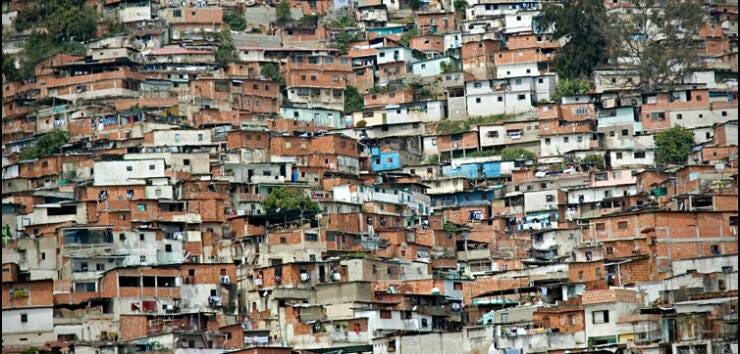
The dramas Being There (1979) and The Constant Gardener (2005) illustrate how gardens shape characters but also how gardeners Chance (Peter Sellers) and Justin (Ralph Fiennes) must leave their gardens behind to succeed. Set in Washington, D.C., Being There uses dark humor to critique the political process that leads Chance toward the Oval Office. Set in Kenya, The Constant Gardener showcases Justin’s attempts to solve a pharmaceutical mystery. In both films, gardens are a stone’s throw from mega-slums. Despite their differences, the garden and its urban setting are bifurcated in all these films, drawing on theories of the garden like that of Leo Marx.

Thursday, February 7, 2019

Green Lungs: Partnering with Nature in the Urban Garden Film Part I


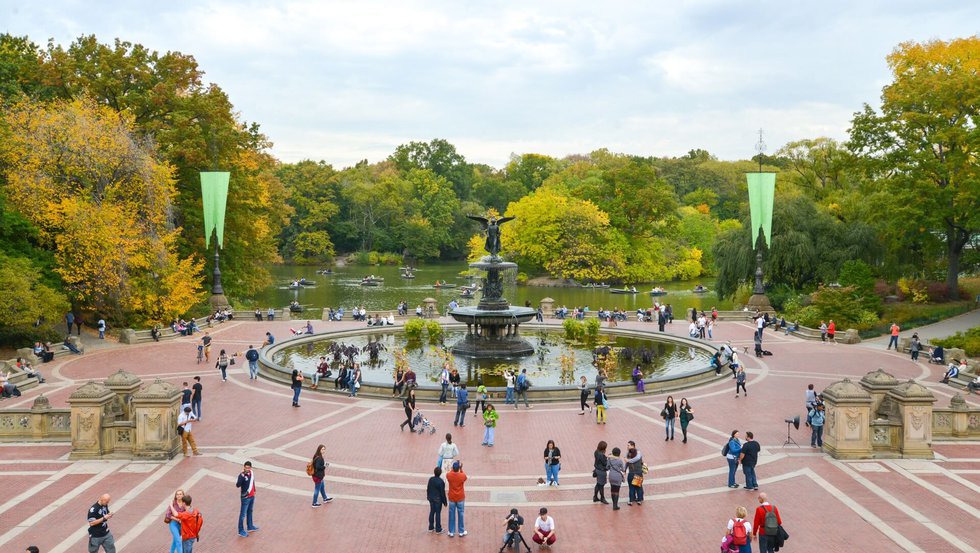
The popularity of Central Park may begin to demonstrate the transformative power of the natural world. It is not only the birds on display but also the park itself that feeds humanity’s love for the natural world. Parks and gardens also benefit humans, providing what Timothy Beatley calls biophilic urbanism. As Central Park’s architect Frederick Law Olmsted’s claimed, “It is a scientific fact that the occasional contemplation of natural scenes of an impressive character is favorable to the health and vigor of men.”Drawing on E. O. Wilson’s notion of biophilia, biologists Bjørn Grinde and Grete Grindal Patil assert, “Humans have an inherent inclination to affiliate with Nature [and] an affection for plants and other living things.” 


This affiliation with the natural world provides “social, psychological, pedagogical, and other benefits,” according to Beatley (211), even in urban areas. Beatley asserts “the nature present in dense, compact cities (such as a rooftop garden, an empty lot, a planted median) … can have restorative benefits” (212). These benefits come to life in documentary and feature films with gardens and parks at their center.


Most films illustrating biophilic urbanism focus on how nature improves human wellbeing. For example, documentaries exploring Central Park primarily highlight how well the park serves its human visitors. Frederick Wiseman’s Central Park(1990) takes a direct cinema approach to the park to reveal how well the park fulfills Olmsted’s mission to bring the benefits of country estates to the masses. As L.A. Times critic Robert Koeller suggests, Central Park“is a fine medium for understanding New York itself, how it needs the park and how the park means different things to different people.” The park benefits people of all races, classes, genders, and sexualities, but nonhuman nature is barely mentioned in the documentary. The Olmsted Legacy: America’s Urban Parks(2011) draws on voiceover and archival photographs and footage to illustrate the scope of Olmsted’s mission to democratize urban parks and improve humanity’s vigor.

Thursday, January 31, 2019

Wallace and Gromit and the Power of Urban Farming


Films about inner-city gardens suggest interactions between human and nonhuman nature may restore both, providing psychological benefits for humans that also encourage the nurturing that allows the natural world to thrive. But that psychological need to affiliate with nature only becomes possible if other human basic needs are fulfilled. 


When the garden turns into a source of food, it begins to serve those without access to fresh fruits and vegetables. Ideally it also transforms food deserts into urban farms that rest on principles of the sustainable development movement espoused by the Brundtland Commission. According to the Commission’s 1987 report, sustainable development is simply the “ability to make development sustainable—to ensure that it meets the needs of the present without compromising the ability of future generations to meet their own needs” (quoted in Kates, et al 8). Documentaries and fictional films exploring urban farming celebrate those farms that promote sustainable development practices. The best of these films showcase practices that align and facilitate sustainable economic, social, and environmental development. 


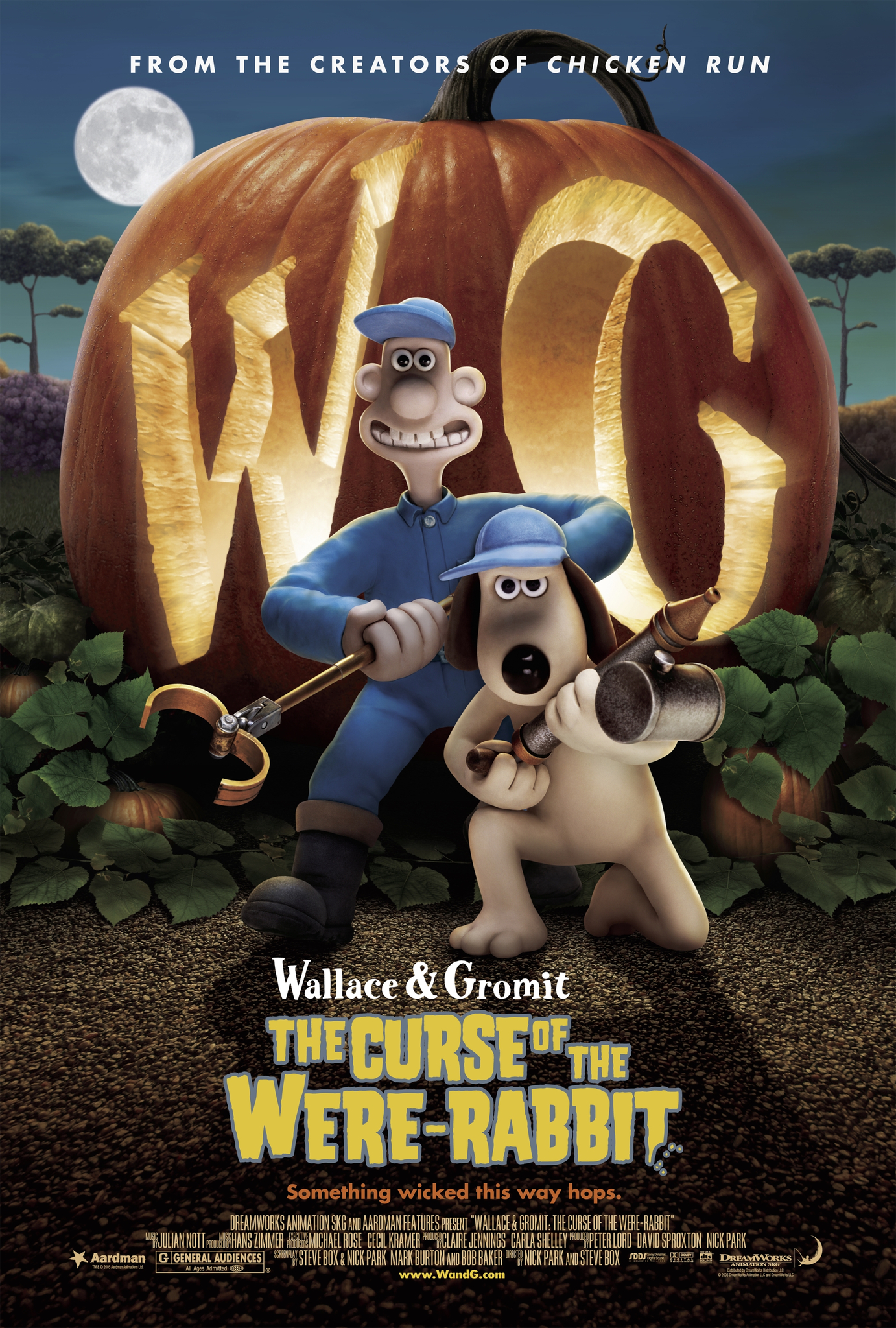
One of the most popular urban farming films, the stop-action animation wonder Wallace and Gromit: The Curse of the Were-Rabbit (2005), illustrates how human and nonhuman nature can work collaboratively to facilitate sustainable development in a community of urban farms. Set in an urban setting where police officers still walk a beat, The Curse of the Were Rabbit offers both laughs and suspense, with a plot addressing individual farms constructed not only to supply food but also to grow champion vegetables for an annual contest. When a giant were-rabbit begins devouring award-winning vegetables, owners and operators of the Anti-Pesto company, Wallace (Peter Sallis) and his dog Gromit set out to stop the destruction and save the farmers and their annual event. 


Although this comic plot seems more like entertainment than bearer of environmental message, the resolution to the conflict points toward the kind of sustainable development recommended by the Brundtland Commission. Ultimately Wallace and Gromit not only solve the mystery when they discover the source of the were-rabbit; they also choose a sustainable solution that protects vegetables, rabbits, and the community: a wildlife refuge on Lady Campanula Tottington’s (Helena Bonham Carter) estate that allows both urban farms and bunnies to prosper. 

Sunday, January 27, 2019

The Scent of Green Papaya and Gardens, conclusion


When Mui dresses in the clothes her former mistress gave her, even painting her lips with lipstick, Khuyen notices her, but the camera reveals not her entrance into modern Vietnam but her connection with the garden. Shots of her inside and out through latticed windows reveal how her beauty aligns with that of nature. Close-ups of rainwater juxtaposed with the shower in which Mui washes her hair reinforce this connection. When Khuyen enters her room, he sees the cricket and hears frogs before noting her beauty.


Although Mui does break up Khuyen’s romantic relationship, the film suggests he has chosen well. Mui writes, “In my garden, there is a papaya tree where papaya hang in bunches.” To illustrate her words, she washes and prepares a papaya, slicing it, revealing the seeds in extreme close-up, and picking out one she places on Khuyen’s plate. 


These close-ups of an open white-seeded papaya juxtapose with shots of a now-pregnant Mui further connecting human and nonhuman nature in the film. The last lines she reads during a literacy lesson reinforce this connection. Now “cherry trees are gripped in shadow” and the end is announced atop a statue of Buddha. The Scent of Green Papaya shows us what an ideal middle place might look like, if only in a fictional narrative and a visually poetic film.

Thursday, January 17, 2019

The Scent of Green Papayas and Gardens, continued


The contrast between Mui and the family continues ten years later, when Mui, now twenty, is forced to leave the family and serve her childhood crush, Khuyen (Hoa Hoi Vuong). The lizards climbing out of vases in these 1961 scenes seem to suggest the civil war outside the garden gates, a point amplified by the sounds of war planes overhead. 


But Mui still watches ants in the courtyard and cares for her cricket. With the father dead and mistress in bad health, however, a daughter-in-law forces Mui to leave, to save money and empty the garden for a parrot farm. Only the mistress laments Mui’s departure, giving her gifts she would have shared with the lost daughter.


When Mui leaves, she takes the crickets and bids the garden and mistress goodbye, taking a portion of the garden with her. And in her new home, Mui bridges the natural world and corrupted middle class together through her relationship with Khuyen and the plants both inside and out, initiating a middle place where both human and nonhuman nature can thrive. She waters potted plants in an inner courtyard, watches toads on leaves, and again cooks meals outside, making Khuyen dinner while he plays Gershwin tunes on the piano. 


Here war planes are heard only in the background and are nearly shut out by the piano and birdsongs.  
Although Khuyen is dating a Westernized woman, Mui watches him and nurtures him as carefully as she feeds her cricket and waters frogs in the courtyard. In this house, pots are full of plants instead of empty adornments. And instead of taunting or ignoring her, Khuyen notices Mui’s connection with nature and careful attention to him, bridging nature with the contemporary world.

Wednesday, January 9, 2019

Post-Colonial Gardens in The Scent of Green Papaya (1993)


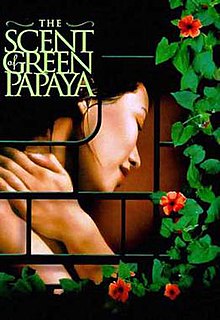
In The Scent of Green Papaya, a courtyard garden serves as young servant Mui’s (Man San Lu and Tran Nu Yên-Khê) respite from a coming war and a 1950s and 1960s bustling city outside its walls, but it also shelters her from the traumatized family she serves, moving her to a middle place like that Adamson describes. Washington Post critic Hal Hinson explains, “In The Scent of Green Papaya, Vietnamese filmmaker Tran Anh Hung’s exquisite, inscrutable elegy for the lost country of his birth, time is not counted in minutes or hours, but in human measures—heartbeats and muffled prayers.” 


We agree but would add nature to the mix, since the inner garden serves as a character in communion with protagonist Mui. For example, when ten-year-old Mui enters the garden, vines, bonsai trees, potted plants, and papaya trees seem to greet her before an older servant Thi (Nguyen Anh Hoa) picking a papaya meets her and leads her to her sleeping quarters. After her long walk from the village, the mistress of her new household (Truong Thi Loc) suggests she sleep, but instead Mui gazes at the plants and birds in the garden, watching milk on a leaf falling from the stem left by the papaya. We see the stem and milk in close-up, turning it into a broad landscape. Lizards climbing trees, frogs in a pond, and singing crickets mesmerize Mui. She also nurtures a cricket, feeding and watering it in its homemade cage. Close-ups of an open white seeded papaya highlight Mui’s natural development. Ultimately, Mui becomes part of the garden, preparing meals for the family and eating leftovers like the ants she watches carry rice scraps to their nests.


Mui’s reverence for nature in the garden contrasts dramatically with the dysfunctional relationships the father and sons have with one another and the natural world. Mui listens to birds sing while she cleans the floor on her knees, but the father (Ngoc Trung Tran) stays in his room playing a stringed instrument, grieving a lost daughter and blaming himself for her death. Since he left with all their money and jewels before her death, he has good cause for his guilt. Without money, the mother could not afford the doctor or medicine to treat her. And when he leaves again, he returns only to die in his bed. The middle son also watches insects, but he pins them to his wall. And when he sees ants carrying crumbs on his windowsill, he pours melted wax over them. He smashes ants struggling to escape the wax. The youngest son spills water on Mui and farts at her as he leaves. Instead of admiring the work of lizards, he ties one to a stick and scares Mui with it. He even urinates in a vase in front of Mui and outside beside the papaya tree. Only the mistress treats Mui and the courtyard garden with respect, perhaps because Mui so reminds her of a daughter who died seven years ago.