This blog explores popular film and media and their relationship to the environment.
Wednesday, March 19, 2014
The Colorado River is Mighty No More
Trying to understand the life of the Colorado River has taken up the lifetimes of many historians, lawmakers, farmers, urban planners and artists. As this enormous river becomes the life source for 7 states and a significant portion of Northwest Mexico, every drop of it has been spoken for. It is used for recreation, for power generation, for farming, for urban sources of drinking water, for industry. It has been subjected to numerous diversions, enormous dam projects and by the time is reaches its end point near Mexico's Gulf of California, it is nothing more than a trickle in most years. Anyone who has tried to learn about The Law Of The River, a series of laws, compacts and agreements that cover all uses of the Colorado, faces a staggering project.
Two films, released by Green Planet Films, now explore vital, but separate issues revolving around environmental issues related to the Colorado. Powell to Powell:Portraits of the Upper Colorado (2013) looks at the first 600 miles of the river. A Changing Delta:Restoring the Colorado Rover Basin in Mexico (2013) covers the last journey of the same body of water. Both begin to open up our eyes and educate us to the complexities of such a valuable and ever changing source of water.
Powell to Powell features four college students who have decided to walk, kayak,swim and pontoon their way from the beginning of the river, in Rocky Mountain National Forest, to the second Lake Powell, one of the southwest's largest man made lakes, in southern Utah.
The first Lake Powell, starts at 9,500 feet above sea level, and the travelers start there. They move quickly by kayaks and start to reveal every spot where the Colorado River meets diversions. Some of these diversions are so massive that they have to walk for miles before getting back to the river. Their journey starts to reveal how the river has now been exploited for numerous uses by an ever expanding population in the state. They talk to farmers, ranchers, urban planners, eco-activists and numerous other people who all have a stake in the survival of the river. By the time they get to the end of their journey they have, in a very brief amount of time, been able to show us the beauty of the river and the land it cuts through, as well as the incredible dangers facing its very existence. By the time the second Lake Powell is reached, we can see how overwhelming the demands of man has made on this river. And we have learned about how ever increasing thirst for this limited resource stretches everyones idea about the river's survival to a series of breaking points.
800 miles further downstream, after the Colorado has been diverted for use by another 5 states, been held back by impediments as large as The Hoover Dam, we get to Colorado River Delta in Mexico.
Here is where A Changing Delta begins. Before the Colorado was reduced to less than 2% of its original flow, the wetland ecosystem and estuary was the size of Rhode Island. Devastated by the loss of water, this part of Mexico is in a state of eco-disaster and scientists, eco-activists, lawmakers, students, teachers and families earning a living off the waterway are struggling to find ways to restore their ancestral estuary.
Andy Quinn, the writer, cinematographer and editor of the film presents us with numerous individuals who are not only trying to find ways to restore the ecosystem, but who are banding together to do consciousness level raising among citizens of all ages. This integrated approach to reclaiming this vital delta is necessary, because Mexico's share of the Colorado is minuscule and much of the water that finally makes it to the end point is choked with debris, chemicals and salt. Money, as well as new laws, have to be in place, along with the political will of the populace in order to reimagine what the delta was once like and why it is necessary to try to restore it to its green and fertile past.
The energy of the Mexican attempts to reclaim their environment is met by harsh facts that surround the exploitation of the Colorado. But many of the citizens of this region now are willing to put the time, energy and political muscle in attempting to bring their almost forgotten way of life back to the present day. Without their commitment this estuary will become a desert, something it had never been until the Colorado started to be taken from them throughout the 20th century.
Tuesday, March 18, 2014
Sand Wars
Written and directed by Denis Delestrac and released by Green Planet Films, Sand Wars (2013), travels around the globe to examine the vital issue of the exploitation of sand. While many of us think of beach erosion when we consider the vital nature of sand, Delestrac makes clear that the need for silica drives the world's construction industries and has led to the planet's reserves of sand being dangerously depleted.
Sand is harvested by ships as large as aircraft carriers, using enormous dredging techniques that wipe out all ocean floor life, while at the same time being illegally harvested by small groups of men who use shovels and burros to make away with this commodity. In a brief but potent 52 minutes, Delestrac
travels across the globe to investigate the influence of sand harvesting on ecosystems as varied as Dubai, Morocco, Indonesia, Maldives, North Carolina, Florida and Brittany,
By interviewing experts in a number of fields and by examining the effects of sand harvesting on ordinary citizens, we quickly learn about the importance of one of the most devoured natural resources on the globe.
Silica is the main component for the production of glass and cement and once chemically broken down into other products, is a key element in the production of food, cosmetics and hundreds of other items. As such it is a valued commodity that will be mined and harvested by anyone who sees a profit in it around the world.
The relentless sand harvesting has not only threatened the coast lines of the world's population, but as Delastrac reveals, continues even in the Maldives, whose island chain is daily threatened by ever increasing ocean levels. Climate change is not only the Maldives biggest enemy. Their own citizens are still harvesting ocean bottom sand and threatening their islands very existence.
Moroccan citizens rage against the destruction of their beach environments, but the sand smuggling is done by young men and boys, laboriously struggling with shovels to move sand onto the backs of burros to be carried away for sale to some unknown source.
Dubai is given special time, because of the contradictions that their construction work faces. While
Dubai builds ever larger buildings, and creates new islands out of sand, none of it can come from the deserts that surround it. Ironically, desert sand does not contain the right structure to be used in construction, so the mega projects that fuel Dubai's new city empire must be made with concrete that uses sand from other world locations.
Everywhere Delestrac travels is another introduction into the dangers of sand depletion. Whole coast lines in the USA are under continual threat of erosion and the attempts to replace declining beach fronts with sand dredged miles off shore just doubles down on the eco-destruction taking place. The ocean floor gets denuded of life and the next storm sucks the new beachfront away.
Sand may appear to be free, but it is not, it may appear to be in endless supply, but that is a mirage. The faster sand is harvested, exploited and disappears, the sooner the consequences of such activities become apparent. The overuse of sand is one more problem to be added to the list of environmental concerns that we all face and the film's laser like focus on this overlooked issue is vital and commendable.
Sunday, March 9, 2014
Central Illinois Feminist Film Festival Film Overviews
March 17, 2014 Lumpkin Hall Auditorium
3:00 Service: When Women Come Marching Home
Service: When Women Come Marching Home portrays the courage of several women veterans as they transition from active duty to their civilian lives. We see the horrific traumas they faced, their invisible as well as physical injuries and all their challenges in receiving benefits and care. Their voices, pictures, and videos shot in Iraq and Afghanistan speak volumes.
March 18, 2014 Doudna Fine Arts Center Lecture Hall
3:30 Beetle Queen Conquers Tokyo
Working backwards through history, Beetle Queen Conquers Tokyo explores the mystery of the development of Japan’s love affair with bugs. Using insects like an anthropologist’s toolkit, the film uncovers Japanese philosophies that shift Westerner’s perspective on nature, beauty, life, and even the seemingly mundane realities of their day-to-day routines.
March 18, 2014 Coleman Hall Auditorium
7:00 Refrigerator Mothers
Refrigerator Mothers paints an intimate portrait of an entire generation of mothers, already laden with the challenge of raising profoundly disordered children, who lived for years under the dehumanizing shadow of professionally promoted "mother blame." Once isolated and unheard, these mothers have emerged with strong, resilient voices to share the details of their personal journeys. Through their poignant stories, Refrigerator Mothers puts a human face on what can happen when authority goes unquestioned and humanity is removed from the search for scientific answers. A roundtable will follow the screening.
Wednesday, March 19 Coleman Hall Auditorium
4:00 p.m. Film Festival Screenings
These screenings will showcase our festival documentary and fictional film winners from around the world.
March 20, 2014 Coleman Hall Auditorium
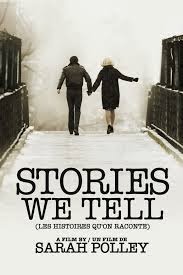
7:00 Stories We Tell
In Stories We Tell, Oscar®-nominated writer/director Sarah Polley discovers that the truth depends on who's telling it. Polley is both filmmaker and detective as she investigates the secrets kept by a family of storytellers. As each relates their version of the family mythology, present-day recollections shift into nostalgia-tinged glimpses of their mother, who departed too soon, leaving a trail of unanswered questions. Stories We Tell explores the elusive nature of truth and memory, but at its core is a deeply personal film about how our narratives shape and define us as individuals and families, all interconnecting to paint a profound, funny and poignant picture of the larger human story.
Wednesday, February 26, 2014
Women's History and Awareness Month 2014:
WO/MEN IN NATURE AND NURTURE
Wednesday, February 26, 4:30PM, Charleston Carnegie Public Library
Living History Project Premiere Presentation
Refreshments to be offered at event
Friday, February 28, 7:30PM, Tarble Arts Center Atrium
Elaine Fine and John David Moore play a concert of violin and piano music written by women
Performance featuring music by Florence B. Price, Clara Kathleen Rogers, Emilie Mayer, and Amanda Maier.
Co-sponsored by the Tarble Arts Center
Monday, March 3, 5:30PM, Doudna Fine Arts Center Lecture Hall
Performance Poetry by Patricia Smith
followed by book signing
Tuesday, March 4, 11:30AM, Roberson Auditorium- Lumpkin Hall
Presentation by Barbara Baurer: "Smart Money, Smart Women"
Refreshments and prizes to be offered during event
Co-sponsored by Lumpkin College of Business, Literacy in Financial Education Center, and Women Exploring Business and Technology at EIU
Tuesday, March 4, 5:00PM, 1895 Room- MLK Jr. Union
Faculty Presentations:
"Gut Feelings: Exploring Gender and Emotions"
Format: TED-Style Ten Minute Talks
Refreshments to be offered during event
Saturday, March 15, 10:00AM, Tarble Arts Center Brainard Gallery
Global Threads: International Folk Art Textiles Opens
Exhibit to run through May 18, 2014
Co-sponsored by the Tarble Arts Center
Friday, March 28, 3:45PM, Location: To be announced
“Reconciling and Reuniting the Nation: How Americans
Have Remembered the Civil
War” with Caroline Janney PURDUE UNIVERSITY
Comment provided by Bonnie Laughlin-Schultz
Sponsored by History Department at EIU, Illinois State Historical Society, Booth Library, Coles County Historical Society, and Illinois State Genealogical
Society.
Monday, March 31, 5:00PM, 7th Street Underground- Martin Luther King, Jr. University Union
Women’s Studies Annual Awards Ceremony
Featuring a musical performance by Motherlode
Refreshments to be offered at event
Wednesday, March 26, 5:00PM, Lecture Hall- Doudna Fine Arts Center
KEYNOTE EVENT:
“The Last Walk: Caring for Our Animal Companions”
with Jessica Pierce UNIVERSITY OF COLORADO DENVER
Reception to follow event
Co-sponsored by Center for Humanities and UBoard
ADMISSION IS FREE FOR ALL EVENTS
Central Illinois Feminist Film Festival: March 17-20, 2014
CENTRAL ILLINOIS
FEMINIST FILM FESTIVAL
March 17-20, 2014
Eastern Illinois University
Monday, March 17, 3:30 p.m.
Service: When Women Come Marching Home
Lumpkin Hall Auditorium
Tuesday, March 18, 3:30 p.m.
Beetle Queen Conquers Tokyo
Doudna Fine Arts Center Lecture Hall
Tuesday, March 18, 7 p.m.
Refrigerator Mothers
plus a roundtable with Charleston Transitional Facility
Coleman Hall Auditorium
Wednesday, March 19, 4 p.m.
Film Festival Screenings
Coleman Hall Auditorium
Stories We Tell
Coleman Hall Auditorium
all screenings are free to attend & open to the public
sponsored by the College of Arts & Humanities
more info @ cifff.wikispaces.com and on facebook
Saturday, February 8, 2014
Water in the Desert Western Before and After WWII
The majority of Westerns take place in an arid landscape of the Southwest where irrigation and water rights provide life to cattle, farmer’s crops, and to settlers. Western films from the 1930s, 40s, and 50s demonstrate the variety of approaches Westerns take when illustrating how settlers overcome drought in the desert. For example, a battle over water fuels a feud in The Painted Desert (1931), but it also is discussed as a necessary resource in a dry landscape—one that is more precious than grub. Because of its value, it allows a family feud to continue for twenty years, until something even more precious—a long-lost son and his discovery of tungsten—stops the feud and, presumably, allows all to share both water and wealth as a family.
In Under Western Stars (1938), a Roy Rogers film, the big water and power company is thwarted by the federal government, and a town gets its water and power. With water, cattle survive, and ranchers make a living off the land. Water turns the dusty desert into a riparian oasis. But the argument in Under Western Stars is over the price of water, not whether or not it serves the environment best to use dams and canals to bring water to a dust bowl, and drought conditions are blamed not on overuse of land but on nature. The environmental bent of the film, then, is focused only on water as a necessary (and inherently free) resource.
In The Angel and the Badman (1947), water serves as only one element in a romantic plot. Quirt (John Wayne) provides a Quaker family and other farmers with needed water now “owned” by a large farmer with dams and a reservoir, Frederick Carson (Paul Hurst). The film’s arguments about water rights also parallel those in Wayne’s earlier film, Riders of Destiny (1933), even nearly recreating the scenes between Wayne’s Singin’ Sandy and James Kincaid in the earlier film with that between Quirt and Carson. Ownership of water in The Angel and the Badman has been shifted from an individual, Carson, to a collective that includes Quaker families with a more communal view of nature. So this brief scene, juxtaposed with others that foreground community as a better goal than conflict and violent tyranny, demonstrates the power of water rights. When water rights become more equally distributed rather than an individually driven economic concern, farmers and their land are better served. Nature and humans here are shown as holding a reciprocal or even symbiotic relationship—the land and its people depend on water to sustain them. More water, more widely distributed, means more fertile land for farming and farmers.
Gene Autry’s Mule Train (1950) highlights water rights in relation to both private ownership and government lands. Sheriff Gene Autry tells “Keg” Rollins (Gregg Barton) that he’s “all through making [anyone] pay for water,” an assertion Rollins argues against. But Autry explains, “It’s still government land and government water, and no one’s going to charge for it. Water’s free” and the conflict is established, all based on the question, can private companies own and control government lands and resources? But the opening scenes with Autry arguing for preservation of free water on government lands serve as the only clear reference to the positive consequences of discovering natural cement: better dams to store and distribute free water.
The Roy Rogers film, In Old Amarillo(1951), provides a different answer to questions related to turning a desert into a garden—cloud seeding. In In Old Amarillo technology from a period concurrent with the film’s production date ends up saving land from drought, but the conflict over water rights remains the same. As in Angel and the Badman and Mule Train, water is constructed as a right, as a resource that should be available to all rather than a commodity to be either horded or withheld for profit. In Old Amarillo simply offers lack of water as a way to acquire lands for profit and for bringing in another source of riches—a cannery.
The Big Country (1958) presents an epic battle over water rights masked by a feud between two ranchers, Major Henry Terrill (Charles Bickford) and Rufus Hannassey (Burl Ives). When James McCay, a ship captain, comes to the West to marry the Major’s daughter, Pat (Carol Baker), he brings with him a worldview like that of Singin’ Sandy and the Quakers in Angel and the Badman and seeks to resolve conflict through negotiation rather than violence. More importantly, McCay buys the land that Terrill and Hannassey are fighting for, so he purchases the water rights for the region. Unlike the Terrills and Hannasseys, however, McCay offers the water freely to both families and, after a series of battles, the two family patriarchs kill one another and the feud, as well as the struggle over water, has been resolved. Only McCay’s purchase of the land owned by Julie Maragon (Jean Simmons), the woman McCay learns to love, halts the blood feud and provides cooperative water rights for both ranches. Terrill’s and Hannassey’s deaths symbolize a changing West, but they also reinforce the end of the feud and the return of free water.
All of these films address water rights in the West in relation to the historical, cultural, and regional contexts with which they interact. More importantly, the films all draw on both historical and environmental memory, a memory that reflects a context contemporary to the films and to their settings. They also reflect a view that nature and culture are interconnected. Without natural resources, especially water, cultures fail. Donald Worster adds weight to this view when he states, “The idea that nature has had something to do with the shaping of cultures and history is an idea that is both obviously true and persistently neglected.” Worster’s work offers a purpose for examining not only the issue of water rights but also its portrayal in western films. The films explored here either explicitly or implicitly rest on “the idea that nature has had something to do with the shaping of cultures and history.” Drought in the American Southwest, and flooding on the coasts today only reinforce Worster’s claims, claims that rest on environmental consequences, capital gains, and an ongoing battle over water.
Subscribe to:
Posts (Atom)