Saturday, September 24, 2022

Happy Feet Two as Enviro-Toon


Happy Feet Two meets the criteria of the Enviro-Toon well. It shows us scenes of Ramon (Robin Williams) struggling to escape an oil spill and watch the spill flame up in a spectacular oil fire. It also explains The Mighty Sven’s (Hank Azaria) dilemma to introduce the film’s central conflict, the negative repercussions of global warming. Sven has lost his icy home to global warming. With warming temperatures, the ice melted, revealing open waters and green grasses that are uninhabitable to puffins. 

The Emperor Penguins face a similar plight when rising temperatures cause glaciers to break off or “calve,” isolating them in a large crevasse encircled by icy walls. Although the film suggests that the solution to this disaster is cooperation (working together to collapse a wall, so the penguins can relocate), the green patches showing through snow and ice tell a different story: climate change is stealing these penguins’ home. 

Unlike the original Happy Feet, humans’ attempts to help the penguins fail. Instead, penguins and their puffin friend are left alone to adapt to a changing landscape caused by humans. Despite the weak link additional characters like Bill and Will Krill (Matt Damon and Brad Pitt) provide, Happy Feet Two succeeds as an enviro-toon and an illustration of the everyday eco-disasters (externalities) associated with obtaining and overusing our resources to meet our basic needs.

Saturday, September 17, 2022

Addressing Everyday Eco-Disasters in Happy Feet Two


For us, despite the film’s weaknesses, Happy Feet Two embraces a broader environmental message than that found in the original Happy Feet film. Happy Feet illustrates a clear eco-problem: overfishing. But the film offers a single unrealistic solution: human intervention to ensure sustainable fishing practices and protect penguins because they dance and sing like humans. 

Happy Feet Two, however, illustrates at least two devastating everyday eco-disasters caused by humans: oil spills and fires, and, more devastating for penguins and humans alike, global warming, both of which connect with humans’ exploitation of resources that meet their basic needs. 

With a more subtle approach to its message, Happy Feet Two looks more like a subtle enviro-toon than a didactic sermon. As Jaime Weinman argues, a model enviro-toon “never preaches.” Unlike cartoons with anthropomorphized animals or plant life alone, what Weinman calls “enviro-toons” not only humanize nature; they comment on abuse of nature and the natural, especially by humans. For us, enviro-toons are animated shorts or feature films that address environmental concerns and embrace an environmental message that responds to their historical and cultural contexts.

Saturday, September 10, 2022

Illustrating Everyday Eco-Disasters in Film


Recent documentaries and feature films explore and argue against everyday eco-disasters. With explorations of films as diverse as Dead Ahead, a 1992 HBO dramatization of the Exxon Valdez disaster, Total Recall (1990), a science fiction feature film highlighting oxygen as a commodity, The Devil Wears Prada (2006), a comment on the fashion industry, and Food, Inc. (2009), a documentary interrogation of the food industry, our projects explore documentaries and feature films as film art to determine how successfully they fulfill their goals. 

We assert that whether or not the films we explore succeed as arguments against everyday eco-disasters and the negative environmental externalities they produce depend not only on the message the filmmakers convey but also, and most importantly, on the rhetorical strategies they employ. 

Happy Feet Two is a case in point. Even though most reviews of Happy Feet Two claim the film has subsumed the original film’s environmental critique of overfishing with an entertaining story of species interdependence, we see the film as a powerful critique of humans’ toxic contributions to climate change and water pollution in order to fulfill basic needs without the restraint necessary for sustainable development. 

 Lisa Schwarzbaum’s Entertainment Weekly review of the film argues, for example, that “Earnest messages about bad climate change and good parenting skills have been replaced by a we-all-share-a-planet sense of fun that's more Finding Nemo than National Geographic.” Manohla Dargis of The New York Times goes further, asserting that the film is merely “an amiable sequel with not much on its mind other than funny and creaky jokes, and waves of understated beauty.”

Saturday, September 3, 2022

Negative Externalities and Fair Vs. Wise Use


Gasland (2010) documents multiple ways natural gas drilling causes negative externalities, threatening upper water supplies in the Delaware basin, for example. Documentaries highlight multiple types of negative environmental externalities: Genetically engineered seed has produced resistant super weeds, and carp introduced in the Chicago River are threatening other fish in Lake Michigan and the other Great Lakes. Environmental externalities have a global effect negatively impacting water, air, housing, energy production, and quality of human and nonhuman life around the world. 

Instead of advocating for the fair use politics associated with the term externality, however, some documentaries and fictional films embrace sustainable development. A fair use model rests on conquest more than conservation. In “The Law of Increasing Returns,” for example, Bailey promotes a fair use model when he asserts, “It is in rich democratic capitalist countries that the air and water are becoming cleaner, forests are expanding, food is abundant, education is universal, and women's rights respected. Whatever slows down economic growth also slows down environmental improvement” (Salon.com). Unfettered economic growth, then, promotes environmental conservation, according to Bailey, so resources should be used as needed to advance economic development and, thus, environmental consciousness. 

Wise use and sustainable policies, on the other hand, disagree with Bailey’s premise. According to an article in Environment, “The Brundtland Commission’s brief definition of sustainable development as the `ability to make development sustainable—to ensure that it meets the needs of the present without compromising the ability of future generations to meet their own needs’ is surely the standard definition when judged by its widespread use and frequency of citation” (Kates et al 10).

Saturday, August 27, 2022

Negative Exteranalities in Documentaries


The term “externality” comes from economics and refers to “an economic choice or action by one actor that affects the welfare of others who are not involved in that choice or action” (Goodwin, et al). Although externalities can be positive, as when “a landowner, by choosing not to develop her land might preserve a water recharge source for an aquifer shared by the entire local community” (Goodwin, et al), environmental externalities are most often negative. 

As Goodwin explains, “a negative externality… exists when an economic actor produces an economic cost but does not fully pay that cost. A well-known example is the manufacturing firm that dumps pollutants in a river, decreasing water quality downstream.” Environmental externalities resulting from everyday eco-disasters continue to have negative effects on water, air, and landscapes. 

For example, oil remains from the 1979 Ixtoc oil spill disaster in the Gulf of Mexico, and cleanup continues after the 1989 Exxon Valdez accident, ominous foreshadowing of the possible aftermath of the 2010 BP environmental catastrophe caused by the Deepwater Horizon rig explosion. 

Negative externalities have a detrimental effect on workers in various industries, including fishing, drinking water, air quality, mountains, and forests. See, for example, the December 23, 2008, coal slurry dam breach caused by mountaintop removal mining in Tennessee or the April 10, 2010 West Virginia Massey mine explosion that left twenty-nine dead.

Saturday, August 20, 2022

The Rhetoric of the Eco-Documentary


Although many would argue that all texts, including documentaries, are inherently rhetorical, since they address an audience from a particular standpoint, historically, the rhetorical documentary presents an argument and lays out evidence to support it. In The Rhetoric of the New Political Documentary, however, Thomas W. Benson and Brian J. Snee assert, “The rhetorical potential of documentary film… relies not on an audience who merely provides the rhetor with resources that might be exploited in persuasion but instead on an audience who is actively engaged in judgment and action” (137). 

Audiences do not merely mimic the action on the screen, according to Benson and Snee. They interpret the actions documented, and invent and engage in acts of their own that respond to the film’s rhetoric, but from the viewer’s perspective. Some of our work examines this rhetorical potential in relation to food industry documentaries. The best of these eco-documentaries fulfill Paula Willoquet-Maricondi’s definition, “to play an active role in fostering environmental awareness, conservation, and political action…, that is, to be a member of the planetary ecosystem or ‘ecosphere and, most important, to understand the value of this community in a systemic and nonhierarchical way (10).” 

When taking a rhetorical approach, documentation of actions also seems to adhere to the criteria Karl Heider outlines for ethnographic filmmaking, when explaining, “the most important attribute of ethnographic film is the degree to which it is informed by ethnographic understanding” (5). According to Heider, first of all, “ethnography is a way of making a detailed description and analysis of human behavior based on a long-term observational study on the spot,” (6). Secondly, Heider suggests that ethnography should “relate specific observed behavior to cultural norms” (6). The individual narratives these films provide also support Heider’s third criteria for an effective ethnography: “holism” (6). These interconnected stories are “truthfully represented” (Heider 7) according to Heider’s final criterion for an effective ethnographic film, all in service to the films’ rhetoric.

Saturday, August 13, 2022

Human Ecology and Self-Sufficiency Standard


For a working adult in Illinois, an hourly wage of at least $8.57/hour was necessary in 2002 to earn the $1508 per month (with 176 hours per month of work) or $18,097 per year salary necessary to meet housing, food, transportation, miscellaneous, and tax expenses (Pearce and Brooks 8). For a family of four, with two working adults, a pre-school child, and a school-age child, an hourly wage of at least $10.07 per adult was necessary in 2002 to earn the $3543 per month (for 176 hours per month of work) or $42,519 per year required to meet these same basic needs, as well as child care expenses (Pearce and Brooks 8). 

This Self-Sufficiency Standard makes clear that at least some of our basic needs have become commodities, which consumers must purchase for survival, a dilemma chemist Ellen Swallow Richards examines in her multiple explorations of human ecology at the turn of the twentieth century. The Human Ecology movement grew out of the work of Richards, who translated Haeckel’s work from its original German and, according to Robert Clarke, introduced the concept of ecology in the United States. Richards defined human ecology as "the study of the surroundings of human beings in the effects they produce on the lives of men" (1910). 

Instead of “fair use” approaches to ecology, with an ultimate goal to maximize benefits of nature for humans, our research sometimes explores how Richards’ human approaches to ecology are manifested in documentary and feature films addressing air pollution, climate change, water rights, and the clothing industry. This approach also points to sustainable development as an alternative to resource exploitations and the everyday eco-disasters associated with them. Our exploration of everyday eco-disasters demonstrates some of the disastrous consequences of applying an economic approach that condones over-development and exploitative overuse and commodification of resources sustaining our basic needs.

Saturday, August 6, 2022

Human Ecology and Basic Needs


Much of our research explores films associated with our basic needs (air, water, food, clothing, shelter, and energy), and the everyday eco-disasters associated with their exploitation. Such exploitation is typically associated with a “fair use” model of ecology, which grew out of economic approaches to the environment connected to Social Darwinism. 

Human approaches to ecology, however, maintain the worth of our basic needs, either as separate from or part of nonhuman nature. Whether defined by psychologist Abraham Maslow as physiological needs, by Reality therapist, William Glasser as survival needs, or self-determination theory as competence in dealing with the environment, our most basic needs all highlight our connection with our external ecology. 

The worth of our basic needs has been calculated in the U.S. and around the world in the last decade to determine the lowest income necessary for a family’s survival. This calculation resulted in the Self-Sufficiency Standard. According to Diana Pearce and Jennifer Brooks, “The Self-Sufficiency Standard measures how much income is needed for a family of a given composition in a given place to adequately meet its basic needs—without public or private assistance” (1). 

This Standard differs from the federal poverty measure in multiple ways: It takes into account regional differences, changing demographics, and new needs. As Pearce and Brooks explain, “there are many families with incomes above the federal poverty line who nonetheless lack sufficient resources to adequately meet their basic needs” (1-2).

Friday, July 29, 2022

Dead Ahead: Exxon Valdez Oil Disaster in Context, conclusion


More importantly, in Dead Ahead Iarossi revealed that Exxon knew about Hazelwood’s drinking problem but allowed him to continue as captain of the Valdez. Iarossi resigned from Exxon in 1990 and became president of the American Bureau of Shipping, “a nonprofit corporation that classifies ships for insurers, inspects blueprints during construction and surveys vessels to make sure they are seaworthy” (“Where are They Now?). According to a 1999 Anchorage Daily New article, Iarossi told The Business Times of Singapore, “What we need to do is to try to develop much more of a safety culture, the mentality which is very much safety-oriented on the part of shipping companies and ship operating officers.” The film draws on this same representation of Iarossi as a figure disillusioned by Exxon’s failure to address safety issues to reinforce its argument for double hulled tankers, but not against oil. 


Representations of Dan Lawn parallel that of Iarossi and, again, validate the film’s call for safer transporting of oil. As chief of the Valdez office of the Alaska Department of Environmental Conservation, Lawn’s character confronts an unresponsive state government, a complaisant EPA, and an unprepared Alyeska Pipeline Service Company, asserting the need for both better preventative systems and emergency plans to tackle oil spills and their consequences. The film’s portrayal of Lawn draws authentically on his attempts to improve both prevention and response strategies. In a 1989 Seattle Times article, for example, Lawn asserts, “We are all to blame…. We demand petroleum products, but we’re unwilling to be taxed. We thought someone was taking care of it. We put in pro-industry officials, and our ability to control things went away” (“The Lost Frontier”). 


Although the film convincingly argues for more effective safety standards to prevent future oil spill disaster, Dead Ahead reinforces the arguments broached in Louisiana Story: If we successfully maintain the bifurcation between nature and culture—between a pristine Alaska and its oil—both can be preserved.

Friday, July 22, 2022

Dead Ahead: Exxon Valdez Oil Disaster in Context, continued


From its opening scenes showing Captain Joseph Hazelwood’s (Jackson Davies) absence from the bridge because of alcohol abuse to its dramatization of conflicts between the U.S. EPA and its local representative, Dan Lawn (John Heard) and between Exxon and its spokesperson, Frank Iarossi (Christopher Lloyd), Dead Ahead effectively addresses the post-spill disaster, arguing both through its narrative and cinematic portrayals of once-pristine waters and landscapes for double hulls in oil tankers and better implementation of protocols if and when another spill occurs. It does not, however, argue against the production and transporting of oil because, as Woodhead states, “America cannot afford to be without (oil) supply, but we better try to do a lot better in controlling how we get it out of there” (King). 


The powerful cinematic representations of the landscape became possible because “establishing shots and aerial footage were shot of the Port of Valdez,” even though Dead Ahead was primarily filmed in Vancouver, British Columbia. According to director Paul Seed, “it would have been difficult to shoot inside Alaska because of the unpredictable weather” (King). The wild shorelines of Vancouver overlap effectively with the establishing shots of Valdez and contrast well with the post-disaster shots of a spill (recreated with a gelatin-based food thickener) to accentuate the dangerous consequences of the spill—losing the pristine beauty of wild nature. 


These contrasting shots parallel the positions voiced by Lawn and Iarossi, who both in some ways oppose the organizations they see as responsible for the spill. Iarossi’s character becomes more authentic because Iarossi willingly answered interview questions, revealing, as he had during the actual spill’s aftermath, Exxon’s reactions to the spill. His focus on safety, however, reinforces the film’s emphasis on accident prevention rather than the eradication of oil production and shipment. Then president of the Exxon Shipping Company, Iarossi represented the company during public forums in Valdez and informed investigators that Captain Joseph Hazelwood was legally drunk during the tanker disaster.

Friday, July 15, 2022

Dead Ahead: The Exxon Valdez Oil Disaster in Context

 Dead Ahead: The Exxon Valdez Disaster focuses primarily on the reasons behind both the spill and its slow cleanup, however, rather than on the inherently dangerous consequences of oil production and shipment. To reinforce this assertion that safety regulations, not the oil industry per se, caused this horrendous disaster and its catastrophic consequences, the film provides a reenactment of the 1989 Exxon Valdez tanker catastrophe, from the moments before the tanker ran aground in Alaska’s Prince William Sound, rupturing its storage tanks and spilling millions of gallons of oil, through its devastating aftermath. 


According to Los Angeles Times staff writer, Susan King, “the behind-the-scenes catastrophes after the mammoth oil spill… shocked the British creative team of HBO’s docudrama Dead Ahead.” The film’s researcher-writer Michael Baker and executive producer Leslie Woodhead called the disaster “a black comedy” (King) because of the neglect and greed of oil and pipeline companies, and the disastrous choices made by the Coast Guard, the EPA, and the first Bush Administration. 


As King declares, the film “depicts the bureaucracy, fighting, and finger-pointing among officials at Exxon, the Alyeska Pipeline Company…, the Coast Guard, the U.S. Environmental Protection Agency and the Bush Administration, while the spill was left basically unattended for days.” Anger with these multiple groups’ mistakes prompted Baker and Woodhead to move forward with the film. As Woodhead explains, “It is so infuriating, the revelation that the oil laid there for three days in beautiful weather. It was just a tangle of priorities and people trying to tidy up their own images which left the oil lying there in the water” (King). Baker agrees, asserting, “People started kind of blaming each other…. It became a question of controlling the media, not cleaning up the oil, but controlling the spill as an event” (King).

Friday, July 8, 2022

The Real Price of Oil: When Externalities Become Transparent in Oil Documentaries


While Louisiana Story and Thunder Bay suggest that oil production will either leave the landscape untouched or benefit its ecosystem, films responding to major oil spills, including the March 24, 1989 Exxon Valdez eco-catastrophe in Alaska’s Prince Edward Sound, highlight the negative effects oil disasters may have on the environment and the cultures and economies it supports. 


Instead of condemning the oil industry in general, however, these films attack individuals and promote safe production practices. In a move similar to that of Louisiana Story, Dead Ahead: The Exxon Valdez Disaster (1992), Black Wave: The Legacy of the Exxon Valdez (2009), and Crude: The Real Price of Oil (2009), assert that because oil and the natural environment don’t mix, they must remain separate. Unlike Thunder Bay, which asserts that humans and the natural world can share an interdependent relationship, Dead Ahead, Black Wave, and, to a certain extent, Crude suggest that human and environmental disasters occur when safety precautions fail, either because of human error or blatant neglect. 


 If, as in Louisiana Story, however, oil companies enter the natural world briefly and with caution to avoid an indelible effect, then, the films suggest, they can avoid such disasters. Ultimately, these films perpetuate the same two myths upheld by Louisiana Story: If implemented correctly and safely, oil drilling can leave a natural setting untouched, so that humans and their technology can remain separate from nature rather than interconnected with it.

Monday, June 27, 2022

Thunder Bay and the Myth of Interdependence Conclusion


Once one of the shrimpers, Teche, learns that golden shrimp, shrimp that have eluded them for decades, are attracted to the rig, interdependence becomes possible. Martin shows Teche the golden shrimp off camera, so when Dominique and the townspeople arrive to take Francesca away, a symbiotic relationship between oilmen and shrimpers is established instead of the continuing conflict Dominique predicts. On camera, Martin tells Teche the golden shrimp foul up their intake valves at night and asks Teche what he might do for him. Teche declares, “What a dumb oil man,” but the ice has been broken and the battle between the shrimpers and oilmen is a short one. 


Martin connects that relationship between the two worldviews to Francesca’s marriage to Gambi, telling the townspeople, “She’s here to stay, and so are we,” when they ask for Francesca. “We won’t hurt ya. We never will. You look for one thing in the gulf. We look for something else. That’s the only business…. Without oil this country would die.” The rig begins to shake as if she will blow. “It’s going to be the richest oil field in the world.” And a gusher rushes up the rig: “Cap that thing fast!” 


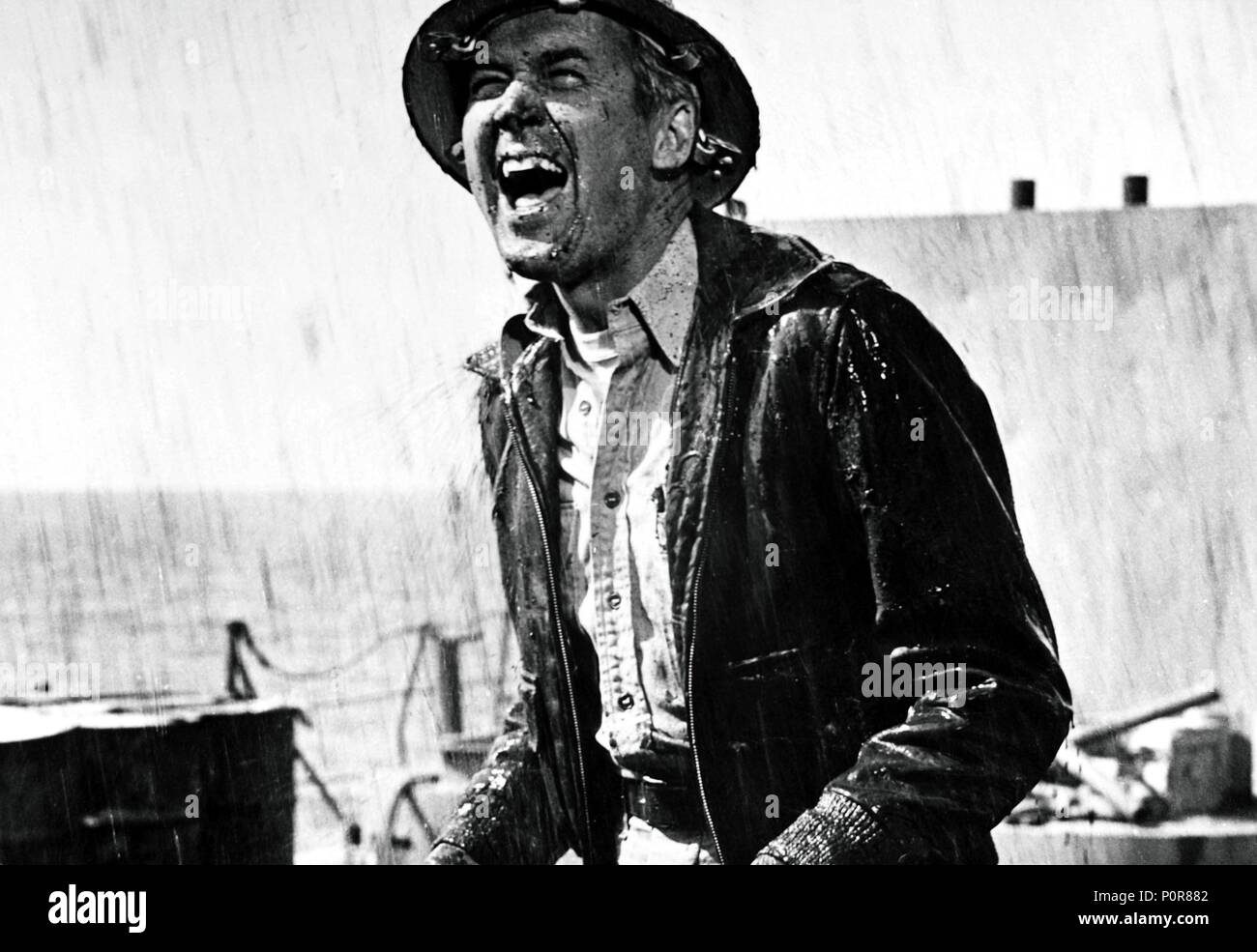
Now both oilmen and shrimpers can reap the benefits of oil drilling in the fantasy narrative on display in Thunder Bay. The oilmen rejoice, covered in oil, and Teche shows fellow shrimpers how to catch the golden shrimp. There are thousands of these wondrous shrimp, and a biotic community is established between oilmen and fishermen. This symbiotic relationship extends to marriage: Gambi marries Francesca, and Martin follows Stella to New Orleans in a truck borrowed from Teche. In a fantastic resolution to a realistic conflict between shrimpers and oilmen, Thunder Bay asserts interdependence, an organismic approach to ecology that suggests human and nonhuman nature can maintain a thriving relationship that benefits them all.

Monday, June 20, 2022

Thunder Bay and the Myth of Interdependence, cont.


The myth of interdependence in Thunder Bay rests on an impossible link between oil and shrimp. When Gambi returns to the rig he and Martin fight, so Gambi nearly loses his job, and the rest of the crew nearly leaves the rig. But when Gambi hears about the financial situation, he brings the men back into their oilrig community, telling them, “We oughta have some of the glory for bringing in the first offshore rig.” Then men stay, and Gambi has married Francesca, building the first tangible bridge between oilmen and shrimpers, so after Martin goes in for supplies, he brings Francesca back for the first honeymoon on an oil rig. 


Gambi also comes back to good news that confirms his claims that shrimp and oil do mix. The golden shrimp are clogging up the pumping devices. The shrimp are attracted to the rig and its drilling apparatus, the film asserts, and Martin reflects on how he should tell the shrimpers about this marvelous discovery. According to Gambi, the golden shrimp only come out at night in this particular part of the bay and could provide shrimpers with a bounty they have never seen before. 


Before Martin can reveal the good news, however, Dominique nearly eradicates the possibility of this effective connection. Instead, he wants to fight Martin and Gambi, rescue Francesca, and destroy the rig. Dominique proclaims, “They’ll kill our fish. They will take everything from us.” The conflict between oil drilling and shrimping is still in place, but, in the film’s context, only because the “truth” has not yet been revealed to Dominique and his friends.

Monday, June 13, 2022

Thunder Bay and the Myth of Interdependence, cont.


 The climax of Thunder Bay occurs when Francesca’s fiancé Phillipe (Robert Monet) tries to blow up the rig, violently opposing oil drilling and causing Martin to think Stella is part of the plan. Martin stops the blasting, but fiancé Phillipe falls, and Martin can’t save him. Drilling continues despite this disaster, with a montage sequence illustrating progress. With eight days to go, however, Mac must pull out of the operation. The company would not finance the drilling, Mac explains, so Mac did, and he is out of money. Now the corporate board will no longer support the project, and it seems as if the shrimpers have won. 


The consequence of the looming deadline provides an exciting spectacle to heighten tension and, in a parallel to the shrimping families ashore, to demonstrate the strong community built on the oil rig. Drilling is going so fast to meet the deadline that a warning bell goes off. It is a saltwater blow, and Gambi is not on the rig to stop it, since he has not yet returned from his secret shore visit with Francesca. All men run to their stations and use the blow out prevention system to stop the blow. When the automatic system fails, they turn to the manual operation, turning the wheels together. Mac and Martin work alongside the men, and the system works. 

The oil rig community seems to be working to ensure a successful drilling process. With Gambi still away, Martin offers the men a $200 bonus if they hit oil, explaining that they will need to work for free for the last week of the operation, since their funding has fallen through. Martin exclaims, “There’s enough oil there to lubricate the universe.”

Monday, June 6, 2022

Thunder Bay and Myth of OIl/Sea Interdependence, Continued


Thunder Bay showcases an evolutionary argument that highlights a desire for a progress built on a rich past and, of course, on oil. Dominique remains unconvinced, however, and induces Mr. Parker (uncredited) from the Department of Wildlife and Fisheries to intervene with a cease and desist order for Martin and Gambi. When Dominique and Parker arrive with the order, Martin has already stopped the blasting, since they have chosen a drilling site. 


Martin’s financial support, Macdonald, “Mac,” however, trusts Martin's claims and gives him twenty-six days to find oil below the rig and, perhaps, even less time to convince the locals that oil and shrimp can build prosperity. During the initial drilling process, shrimpers and oilmen remain in opposition. But Martin is so dedicated to this mission that he stays on the rig during a possible hurricane. 


And when Stella comes to make sure her younger sister, Francesca, does not marry Gambi, Martin explains the challenge of oil drilling and establishes a foundation for his own beliefs in mutual progress: “Now oil was found…. It was found from things dying millions of years ago” and can build a future from the past putting all time together. 

Monday, May 30, 2022

Thunder Bay and the Myth of Interdependence


 Ultimately, Thunder Bay reinforces Steve Martin’s position on offshore oil drilling. Martin effectively argues for the off-shore drilling by stressing interdependence, an organismic approach to ecology, claiming that oil and shrimp can not only mix but bring prosperity to all: “There’s oil down there,” Martin proclaims, and “this is going to be good for the town, good for the people.” 


The conflict is not so easily resolved, however, and must first rise to a climax. Because of his opposition to oil drilling, for example, Dominique will no longer rent his shrimp boat to Martin and Gambi, but his friend Teche (Gilbert Roland) will, perhaps only as another income source. The other shrimpers remain concerned: “Don’t they know they’re killing the shrimp?” Dominique asks. Stella, Dominique’s oldest daughter agrees, exclaiming, “The town’s not enough. They have to kill the whole bay.” 


During the initial seismic blasting that will locate the best areas for underwater drilling, Martin disagrees and reinforces his claims that oilmen and shrimpers can build a prosperous community together: “Those shrimp can withstand ten times the blast,” he asserts. After the blasting, however, the townspeople plan to stop Martin and Gambi because they believe their dynamite may have destroyed the shrimp beds. 


When Stella warns Martin that the townspeople may confront him, however, he continues to stress the potential for an interdependent relationship between shrimpers and oilmen, telling her that dynamite won’t “do any harm. If it hurt the shrimp, I’d stop it.” And when the townspeople nearly attack him, Martin continues to espouse his claims for an interdependent relationship between them: “Nothing we do spoils the fish or the town…. Oil is going to do good things for the place.”

Monday, May 23, 2022

Thunder Bay and the Myth of Interdependence


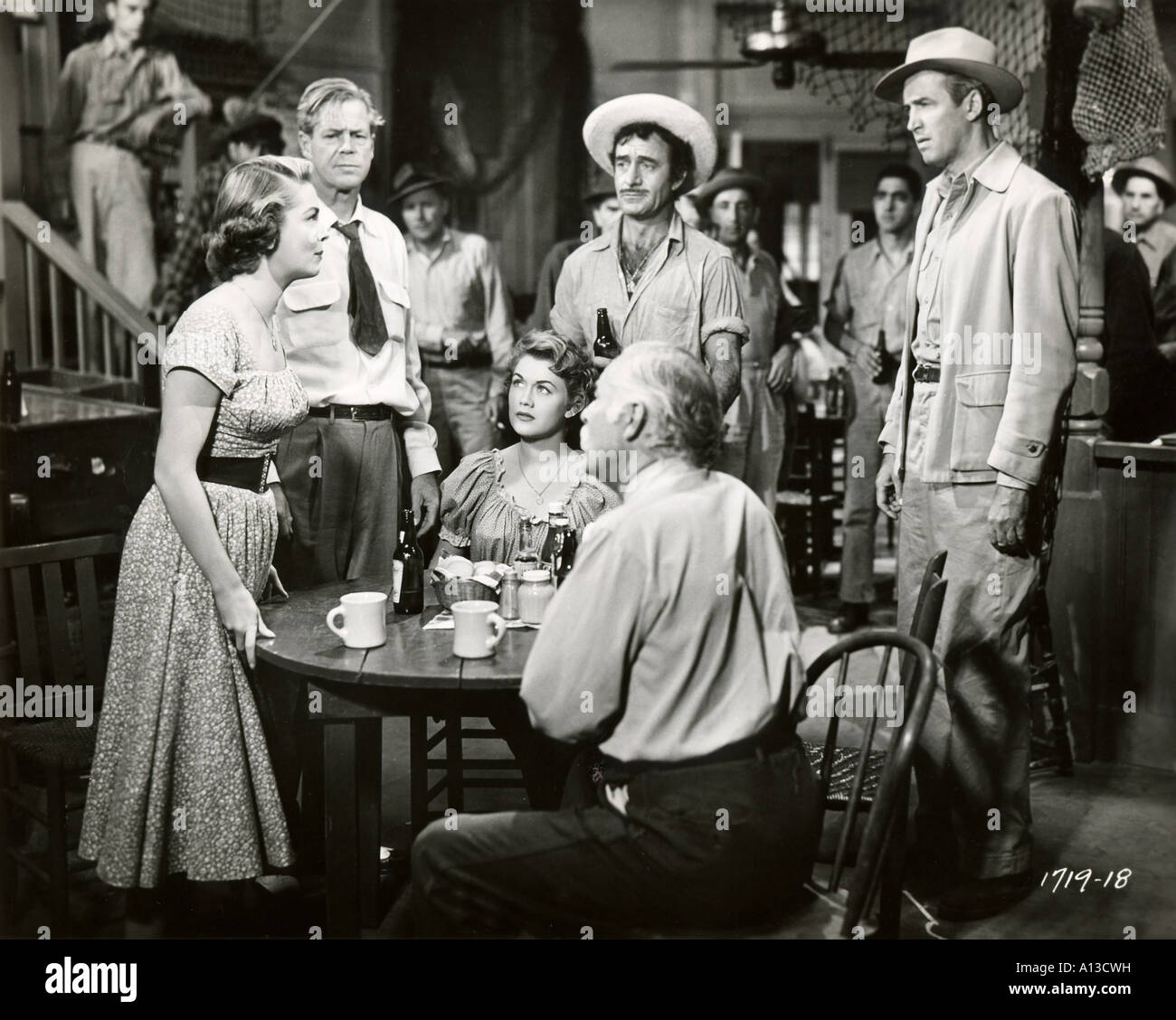
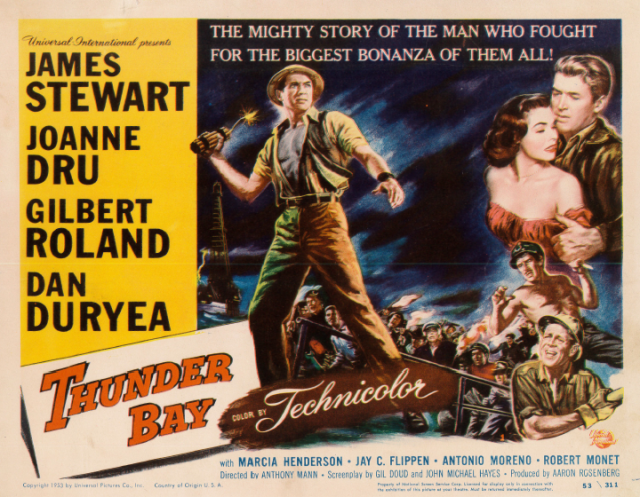
Set in 1946 Louisiana, Thunder Bay connects oil drilling and shrimping from its opening shot of Johnny Gambi and Steve Martin (James Stewart) walking down a long deserted road: They carry a heavy chest and discuss a money making idea that will require a $2 million investment, but then a Port Filliay Fish Company truck picks them up and takes them into town for a 2:00 appointment, aligning their oil drilling plan with the community’s fishing industry. The connection between fishing and oil drilling broached by the film is emphasized here, especially since, once they reach town, Gambi rents a shrimp boat for $50 a day, so the two can, they hope, form a partnership with a big oil man, Kermit MacDonald (Jay C. Flippen). 


At first, however, the relationship between oil drilling and fishing is seen as conflicting rather than interdependent. To offset any hostility their enterprise might ignite, Gambi and Martin encourage area fishermen to think they are opening a fish cannery. But when their potential investors arrive by seaplane and, despite company troubles, agree to fund Steve Martin’s project, an offshore drilling platform and rig, the film’s major conflict is broached. Even though business investor MacDonald gives Stewart money in advance to pay off debts and promises to deposit $500,000.00 the next day, the area shrimpers are skeptical of this possible disruption to their means of survival and way of life. 


The shrimp boat owner Dominique’s (Antonio Moreno) daughters serve as love interests for Gambi and Martin and another source of conflict between local fishermen and the oil drillers: the elder sister Stella (Joanne Dru) eventually partners with Martin, and the younger sister Francesca (Marcia Henderson) pairs up with Gambi. Primarily, however, the townspeople oppose Martin and Gambi, believing that oil and shrimp can’t mix. The primary conflict of Thunder Bay, then, is between those who make a living from the sea—shrimpers and other fishermen—and those who would like to make a living from what lies beneath its waters—oilmen. Although history suggests this conflict is irresolvable, however, the film negotiates a resolution between these two world views and sources of income that is based in organismic approaches to ecology.

Monday, May 16, 2022

Thunder Bay and the Myth of Interdependence, continued


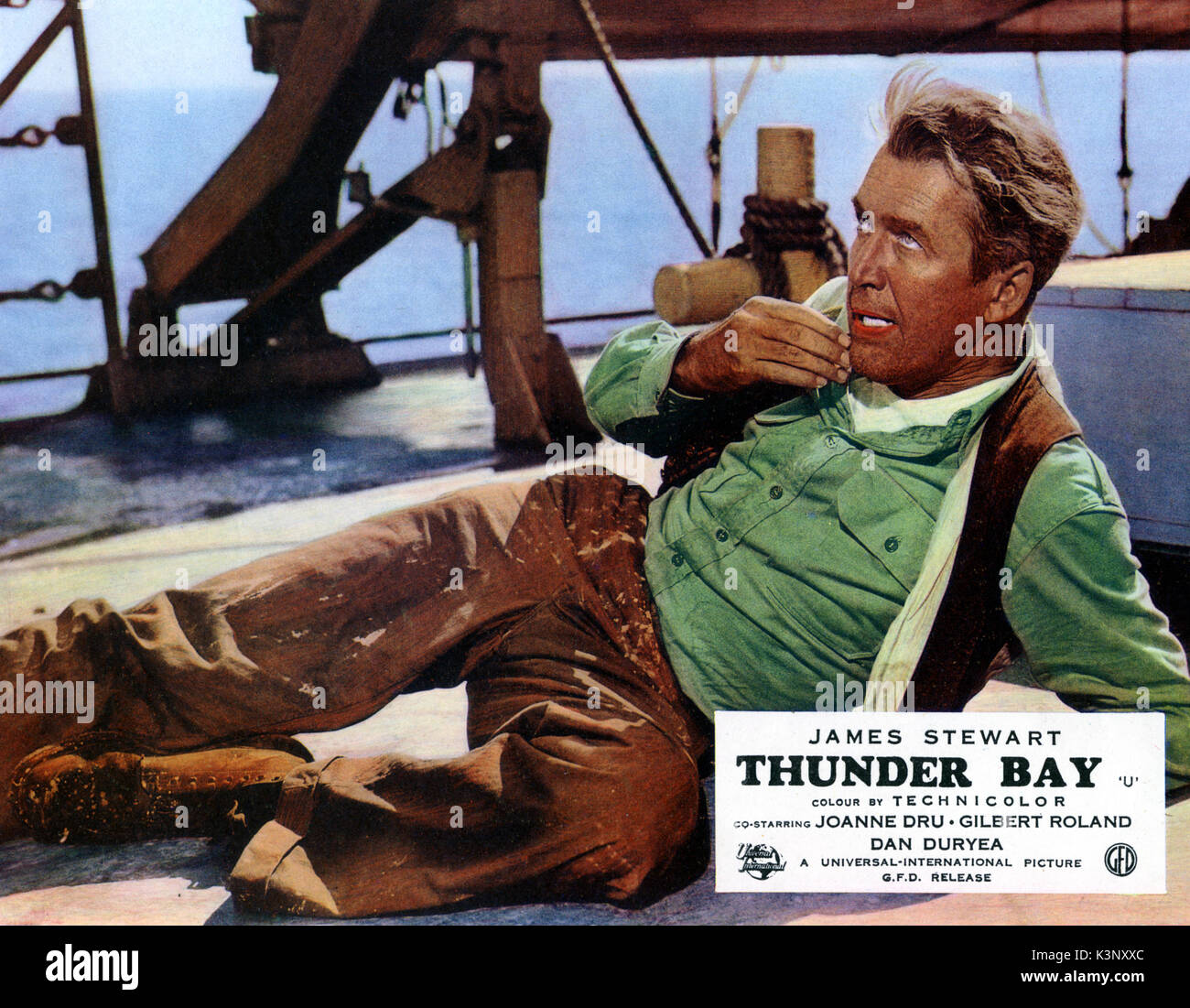
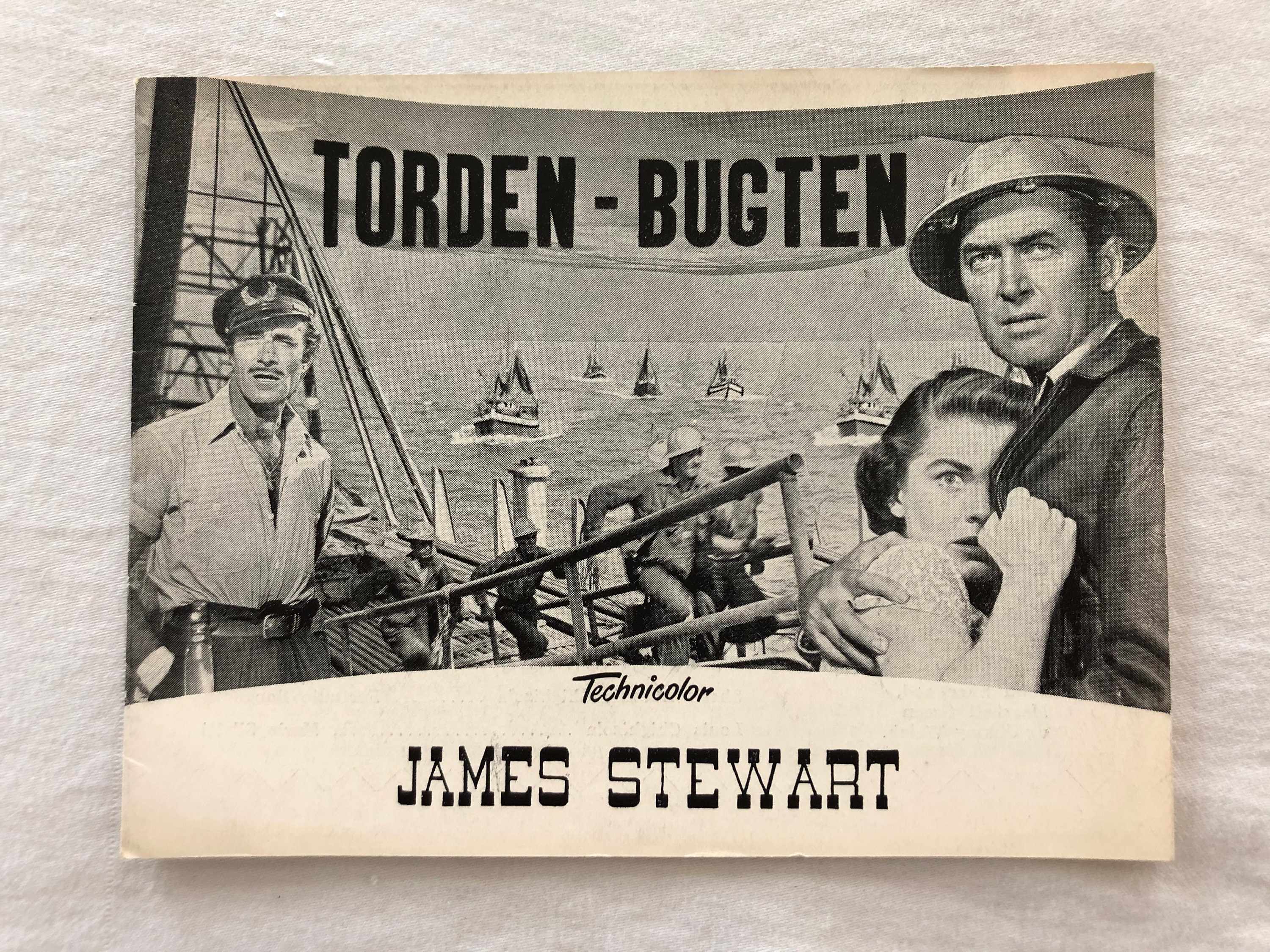
According to James Stewart biographer Jeanine Basinger, “Although it is somewhat unsettling today to watch a movie that sets a conflict between oil-drilling and nature—and oil-drilling is the hero—the machinery and the rig are photographed as things of beauty and majesty” (132) in Thunder Bay. From Basinger’s perspective, “Hard industrial grays and reds replace the greens and blues of nature and become the ‘colors’ of the modern era” (132). A. W. of The New York Times agrees, asserting that visually, “the complex off-shore drilling apparatus is the most distinctive aspect of Thunder Bay.” Shot in Technicolor and shown on an innovative “wide, curved screen [with] stereophonic [stereo] (or directional) sound” (A.W.) in the Loew’s State Theatre, Thunder Bay’s vast setting took center stage, overshadowing its weak narrative. 


Basinger calls the film and its ending “a modern environmentalist’s worst nightmare” based on her reading of the film as a conflict between oil-drilling and nature in which oil-drilling wins, perhaps missing the film’s implausible environmental message: shrimpers and oil men can live together interdependently because the elusive golden shrimp are not only undamaged by oil drilling but attracted to the rig. Other reviewers address this move toward interdependence. Reviewer Dennis Schwartz claims the film’s resolution “has shrimpers and oil men willing to live with each other in harmony, saying there’s room for both.” Reviewer Dan Jardine asserts that Anthony Mann establishes a conflict of world-views between what he calls Hispanic shrimp fishermen and speculative oil men but “backs away from the dialectic he has established from the get-go and gives us a soppy and completely implausible restorative ending.” 


Although we agree that the film’s ending is implausible, we argue that the seeds of a resolution to the conflict between shrimpers and oilmen are planted early in the film when the romantic plot between Johnny Gambi (Dan Duryea) and Francesca Rigaud (Marcia Henderson) is broached. Thunder Bay moves beyond Louisiana Story, then, not only claiming that oil drilling can leave the natural world untouched, but also asserting that oil drilling and shrimping can coexist interdependently.

Monday, May 9, 2022

Anthony Mann's Thunder Bay (1953) and the Myth of Interdependence


Whereas Louisiana Story makes the case that an oil company can build its rig, drill for oil, build a pipeline and disappear, leaving the bayou untouched and the Cajuns around the well a little richer, Thunder Bay asserts that oil drillers and shrimpers can work together. In fact, in Thunder Bay, oil drilling provides more than jobs and money, according to the film. It provides access to “the golden shrimp” fishermen have been seeking for generations, stimulating a more productive shrimp season. 


Thunder Bay’s populist presentation of progress and organismic or wise use approaches to ecology seem like more viable choices for both local shrimpers and their environment. But those visions also break down in the face of the negative externalities ever present during offshore oil drilling. Although the film suggests shrimpers and oil drillers can build and maintain interdependent relationships that serve them both economically while preserving the sea and its marine life, suggesting the possibility of sustainable development in the gulf, those claims are all based in fiction (myth) rather than fact (reality). 


Thunder Bay approaches off-shore oil drilling from a strictly fictional point of view, without claiming a more fact-based documentary approach to the subject, but it also illustrates a skewed point of view of oil drilling perhaps reinforced by one of the film’s star’s (James Stewart) connections to the oil industry. In her updated biography of Anthony Mann, for example, Jeanine Basinger recounts James Stewart’s connection to the film and its subject, explaining that Thunder Bay was one of three projects Stewart found and asked Mann to direct, in this case because Stewart had joined a partnership with a Texas oilman (132). Despite its weak script, Anthony Mann’s “mastery of physical space” (Basinger 132) stands out in Thunder Bay.